Charitable Trust
A Charitable Trust is a legal structure established to undertake activities for charitable and public welfare purposes such as education, healthcare, social welfare, rural development, environmental protection and other causes benefiting society.
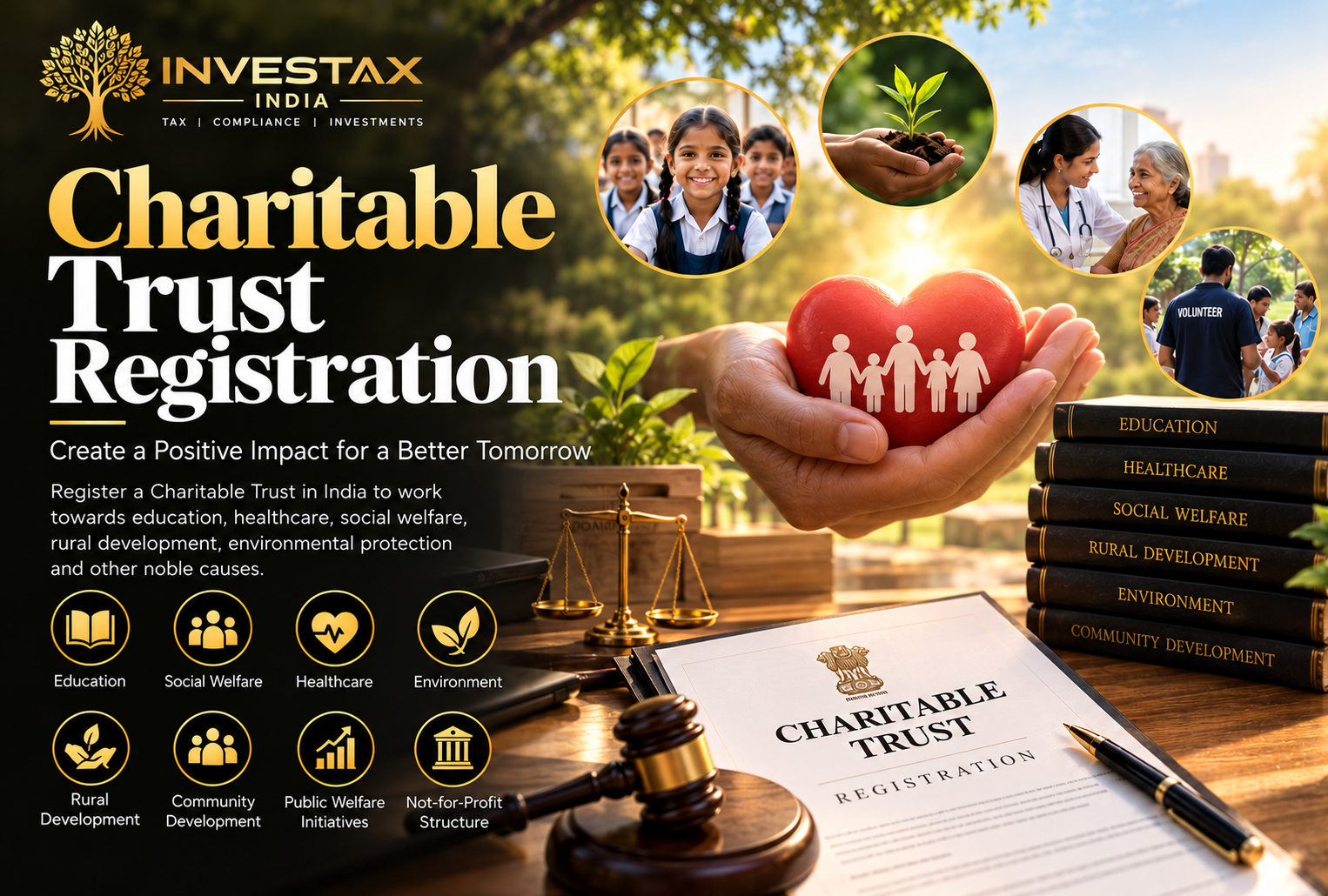
Charitable Trust Registration
A Charitable Trust is an organisation established to carry out activities for charitable, social and public welfare purposes. It can be used to create a structured platform for initiatives relating to education, healthcare, social welfare, poverty relief, rural development, environmental protection and other activities intended for the benefit of society.
Setting up a Charitable Trust involves defining its objectives, preparing the trust deed, identifying the trustees and completing the applicable registration and regulatory requirements. Proper structuring at the beginning can help establish a clear framework for the management and activities of the Trust.
What is a Charitable Trust?
A Charitable Trust is created when a person or group of persons dedicates assets or resources towards specified charitable objectives and appoints trustees to manage those resources in accordance with the Trust Deed.
The Trust operates according to its stated objectives and the applicable legal framework. Its activities should remain aligned with the charitable purposes for which it has been established.
Who Can Set Up a Charitable Trust?
Individuals, families, groups, institutions and organisations intending to undertake genuine charitable or public welfare activities may consider establishing a Charitable Trust.
A Trust may be suitable for initiatives relating to:
- Education and literacy
- Healthcare and medical assistance
- Poverty relief and assistance to disadvantaged communities
- Women and child welfare
- Rural and community development
- Environmental protection
- Relief and rehabilitation activities
- Promotion of art, culture and heritage
- Skill development and vocational training
- Other charitable and public welfare initiatives
Key Features of a Charitable Trust
- Established for defined charitable or public welfare objectives.
- Managed by trustees in accordance with the Trust Deed.
- Can provide a structured framework for carrying out charitable activities.
- Assets and funds are managed for the stated objectives of the Trust.
- Requires proper maintenance of financial and organisational records.
- May require additional registrations or approvals depending on its activities and funding.
- Subject to applicable tax and regulatory compliance requirements.
Objectives of a Charitable Trust
The Trust Deed should clearly specify the charitable objectives of the organisation. The objectives may cover one or more areas of public benefit.
Common objectives include:
- Promotion of education
- Medical relief and healthcare
- Relief of poverty and distress
- Rural development
- Environmental conservation
- Women and child welfare
- Promotion of sports
- Scientific research
- Art and cultural development
- Community development and social welfare
Documents Required for Charitable Trust Registration
- PAN and identity proof of the settlor.
- Identity and address proof of trustees.
- Photographs of the settlor and trustees, where applicable.
- Proof of registered office address.
- Ownership proof or rent/lease documentation for the premises, as applicable.
- Recent utility bill of the registered office, where required.
- Details of the proposed charitable objectives.
- Trust Deed containing the terms and objectives of the Trust.
- Other declarations and documents required by the applicable authority.
Charitable Trust Registration Process
Step 1 – Define the Charitable Objectives
The proposed activities and charitable objectives are identified and clearly documented.
Step 2 – Identify the Settlor and Trustees
The person establishing the Trust and the persons who will manage its affairs as trustees are identified.
Step 3 – Draft the Trust Deed
The Trust Deed is prepared to define the Trust's objectives, powers, management structure, responsibilities of trustees and other important terms.
Step 4 – Arrange the Required Documents
Identity, address, registered office and other supporting documents are collected and reviewed.
Step 5 – Execute the Trust Deed
The Trust Deed is executed in accordance with the applicable requirements, including applicable stamp duty requirements.
Step 6 – Registration
The Trust Deed and required documents are submitted to the appropriate authority for registration in accordance with the applicable law and procedure.
Step 7 – Obtain Additional Registrations, Where Applicable
Depending on the Trust's activities, funding model and eligibility, additional tax registrations, approvals or other registrations may be required.
Trust Deed – Why It Matters
The Trust Deed is one of the most important documents of a Charitable Trust. It establishes the purpose and operating framework of the organisation.
A properly drafted Trust Deed should clearly address matters such as:
- Name and registered office of the Trust.
- Objects and charitable activities.
- Details and powers of trustees.
- Management and administration of the Trust.
- Application and management of Trust funds.
- Rules relating to appointment or replacement of trustees.
- Maintenance of accounts and records.
- Amendment provisions, where applicable.
- Dissolution or winding-up provisions.
Tax Exemptions and Registrations
Registration of a Charitable Trust and eligibility for tax benefits are separate matters. A Trust may need to obtain appropriate registrations or approvals under the applicable income-tax provisions to claim specific tax benefits or exemptions.
Eligibility depends on factors such as the Trust's objectives, activities, documentation, compliance and applicable law. Donor-related benefits may also require separate eligibility and compliance.
Compliance Requirements
After registration, a Charitable Trust should maintain proper records and comply with applicable legal and tax requirements.
Depending on the nature and activities of the Trust, compliance may include:
- Maintenance of books of account and financial records.
- Preparation of financial statements.
- Tax return filing, where applicable.
- Audit requirements, where applicable.
- Maintenance of trustee and governance records.
- Compliance with applicable tax registrations and conditions.
- Maintenance of proper records relating to donations and expenditure.
- Additional reporting or regulatory requirements applicable to the Trust's activities.
Advantages of a Charitable Trust
- Provides a dedicated structure for charitable activities.
- Allows founders to define clear long-term social objectives.
- Provides a framework for managing charitable assets and funds.
- Can support continuity of charitable initiatives through trusteeship.
- Can be suitable for education, healthcare, welfare and community initiatives.
- May provide access to applicable tax benefits subject to eligibility and required registrations.
Charitable Trust vs Section 8 Company vs Society
Charitable Trusts, Section 8 Companies and Societies can all be used for charitable and social welfare activities, but they have different legal structures and governance frameworks.
A Charitable Trust is primarily governed through its Trust Deed and the applicable trust and tax framework. A Section 8 Company operates under the Companies Act, 2013 with a corporate governance structure, while a Society is generally governed under the applicable Societies Registration framework.
The appropriate structure depends on the proposed activities, governance requirements, funding plans, number of founders, operational model and long-term objectives of the organisation.
Why Choose Investax India?
Establishing a Charitable Trust requires careful planning of its objectives, Trust Deed, trusteeship structure, registration requirements and subsequent compliance.
Investax India provides professional assistance for Charitable Trust registration and related compliance requirements, helping individuals and organisations establish their charitable initiatives through a structured and practical process.
From defining the appropriate structure and preparing documentation to understanding applicable registrations and ongoing compliance, our team helps simplify the process so that founders can focus on their intended social objectives.
Frequently Asked Questions
1. What is the purpose of a Charitable Trust?
A Charitable Trust is established to undertake activities for charitable or public welfare purposes such as education, healthcare, poverty relief, environmental protection, rural development and social welfare.
2. Who can create a Charitable Trust?
An individual or group of persons may establish a Charitable Trust, subject to the applicable legal requirements.
3. What is a Trust Deed?
A Trust Deed is the principal document that establishes the Trust and sets out its objectives, trustees, powers, management framework and other important terms.
4. Can a Charitable Trust receive donations?
A Charitable Trust may receive donations subject to applicable laws, its objectives and any registrations or approvals required for the particular type of donation or funding.
5. Does registration of a Charitable Trust automatically provide tax exemption?
No. Trust registration and eligibility for specific tax exemptions or benefits are separate matters and may require additional registrations or approvals subject to applicable law.
6. Can a Charitable Trust undertake educational or healthcare activities?
Yes. Education and healthcare are common charitable objectives, provided the activities are carried out in accordance with the Trust's stated objects and applicable laws.
7. Is annual compliance required for a Charitable Trust?
Depending on the Trust's registration, activities, income and applicable tax provisions, various accounting, audit, tax filing and other compliance requirements may apply.
8. How can Investax India help?
Investax India can assist with Charitable Trust registration, Trust Deed documentation, applicable tax registrations and ongoing compliance support based on the organisation's requirements.
Need help with Charitable Trust?
Get practical guidance on requirements, documentation, compliance and the right service for your needs.