
```
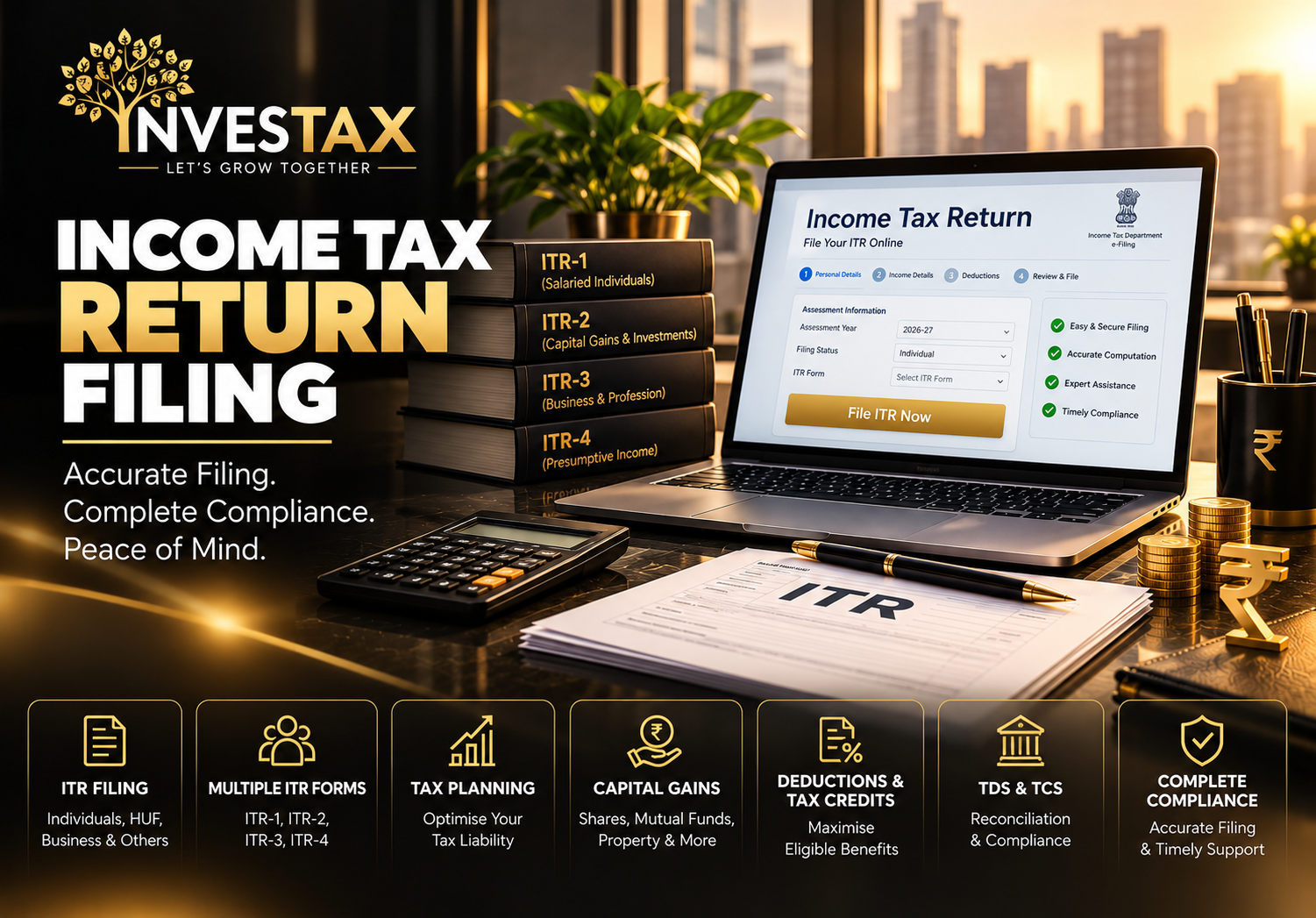
Income Tax Return Filing
Filing an Income Tax Return (ITR) is an important part of income-tax compliance. An Income Tax Return provides details of your income, deductions, investments, taxes paid and other information required under the applicable income-tax law.
At Investax India, we provide professional Income Tax Return filing assistance for salaried individuals, professionals, investors, HUFs, proprietors, partnership firms, LLPs and companies.
Our approach covers the complete return-filing process, including reviewing income information, identifying the applicable ITR form, reconciling tax credits, calculating taxable income, reviewing deductions and completing the filing requirements.
Important Update: Income-tax Act, 2025
The Income-tax Act, 2025 came into effect from 1 April 2026 and replaces the Income-tax Act, 1961, subject to applicable transition provisions.
Under the new framework, the traditional Assessment Year terminology has been discontinued and the concept of a Tax Year has been introduced.
FY 2025-26: Income earned during FY 2025-26 is governed by the Income-tax Act, 1961 and is reported for AY 2026-27.
Tax Year 2026-27: Income earned from 1 April 2026 to 31 March 2027 is governed by the Income-tax Act, 2025 and is referred to as Tax Year 2026-27.
Taxpayers do not need to file two returns merely because of the transition. The return for Tax Year 2026-27 becomes due after the end of that Tax Year.
What is an Income Tax Return?
An Income Tax Return is a prescribed statement through which a taxpayer reports relevant income, deductions, taxes paid and other required information to the Income Tax Department.
Depending on the taxpayer and nature of income, the return may include information relating to salary, pension, house property, business or professional income, capital gains, interest, dividends and other sources of income.
The return also helps determine whether additional tax is payable or whether the taxpayer is eligible for a refund based on taxes already paid.
Income Tax Return Filing Under the Income-tax Act, 2025
The Income-tax Act, 2025 consolidates the principal provisions relating to filing of returns under Section 263.
Section 263 brings together provisions relating to the:
- Original Return
- Belated Return
- Revised Return
- Updated Return
The Income Tax Department states that the fundamental framework relating to mandatory filing, due dates and categories of persons required to file remains broadly similar to the earlier law, while the provisions have been reorganised under the new Act.
Tax Year Instead of Assessment Year
One of the important changes introduced by the Income-tax Act, 2025 is the introduction of the Tax Year concept.
A Tax Year generally corresponds to the financial year beginning on 1 April and ending on 31 March.
FY 2025-26
Income earned from 1 April 2025 to 31 March 2026 is governed by the Income-tax Act, 1961 and is reported for Assessment Year 2026-27.
Tax Year 2026-27
Income earned from 1 April 2026 to 31 March 2027 is governed by the Income-tax Act, 2025 and is referred to as Tax Year 2026-27.
The Income Tax Department explains that there is no Assessment Year concept under the Income-tax Act, 2025. The Tax Year aligns the tax period more closely with the financial year.
Who Should File an Income Tax Return?
The requirement to file an Income Tax Return depends on the taxpayer's income, nature of income, applicable thresholds and other conditions prescribed under the applicable law.
Return filing may apply to individuals and entities in various circumstances, including:
- Salaried individuals
- Professionals and consultants
- Freelancers
- Self-employed persons
- Investors earning taxable income or capital gains
- HUFs
- Proprietorship businesses
- Partnership firms
- LLPs
- Companies
- Trusts and other specified entities
Certain taxpayers may also have filing obligations because of specified transactions or circumstances even where their income is below a particular threshold. The applicable requirements should therefore be checked for each taxpayer individually.
Choosing the Correct ITR Form
Selecting the appropriate Income Tax Return form is an important part of filing. The correct form depends on the taxpayer's status, sources of income, business or professional activity, capital gains and other applicable conditions.
ITR-1
Generally applicable to eligible resident individuals meeting the prescribed conditions, including specified salary, pension, house property and other-source income.
ITR-2
Generally applicable to individuals and HUFs who are not eligible to file ITR-1 and do not have income from profits and gains of business or profession.
ITR-3
Generally applicable to individuals and HUFs having income from profits and gains of business or profession, along with other applicable sources of income.
ITR-4
Generally applicable to eligible individuals, HUFs and firms other than LLPs who meet the prescribed conditions for presumptive taxation.
The exact eligibility conditions for each ITR form should always be checked for the relevant tax year. For example, the Income Tax Department's current AY 2026-27 guidance specifies eligibility and exclusions for ITR-1 through ITR-4.
Our Income Tax Return Filing Services
Salaried Individuals
ITR filing assistance for salaried employees, including salary income, interest income, deductions, TDS reconciliation and applicable investment-related income.
Professionals & Freelancers
Return preparation and filing assistance for consultants, freelancers, professionals and self-employed individuals based on their applicable income and expense records.
Capital Gains
Assistance with reporting capital gains arising from shares, mutual funds, securities, property and other capital assets.
Business Income
Income Tax Return filing support for proprietorships, partnership firms, LLPs and other businesses based on applicable provisions.
HUF Returns
Assistance with Income Tax Return preparation and filing for eligible Hindu Undivided Families.
Company & Entity Returns
Income Tax compliance and return filing support for companies and other entities according to their applicable filing requirements.
What Information Is Considered While Filing an ITR?
Preparing an accurate Income Tax Return requires a review of the taxpayer's income, investments, taxes paid and other relevant financial information.
- Salary and pension income
- Income from house property
- Business or professional income
- Interest income
- Dividend income
- Capital gains
- Foreign income and assets, where applicable
- TDS and TCS credits
- Advance tax payments
- Self-assessment tax payments
- Eligible deductions and tax benefits
- Losses eligible for carry-forward, where applicable
- Other information required by the applicable ITR form
Documents Generally Required for ITR Filing
The documents required depend on the taxpayer's income sources and circumstances. Commonly required information may include:
- PAN and Aadhaar details
- Form 16 for salaried taxpayers
- Form 16A, where applicable
- Bank statements
- Interest certificates
- Investment statements
- Capital gains statements
- Details of dividends and other income
- Home loan interest certificate, where applicable
- Details of eligible deductions
- TDS/TCS information
- Advance tax and self-assessment tax challans
- Business books and financial statements, where applicable
AIS, TIS and Tax Credit Reconciliation
Reviewing information available with the Income Tax Department is an important part of accurate return preparation.
Depending on the applicable tax period, taxpayers may need to reconcile information such as TDS, TCS, specified financial transactions, tax payments, interest, dividends and other reported information before submitting the return.
For periods governed by the Income-tax Act, 2025, the Income Tax Department has stated that the Annual Information Statement framework evolves into Form No. 168 from Tax Year 2026-27 onwards.
Original Income Tax Return
An original return is the regular return filed within the applicable statutory due date under the applicable provisions.
Before filing, taxpayers should review their income, deductions, tax credits, bank information and other relevant details to ensure that the information submitted is complete and accurate.
Belated Income Tax Return
If a taxpayer does not file the return within the prescribed due date, a belated return may be available subject to the applicable conditions, fees, interest and statutory time limits.
Under Section 263(4) of the Income-tax Act, 2025, the Income Tax Department currently states that a belated return may be furnished within nine months from the end of the relevant Tax Year or before completion of assessment, whichever is earlier.
Revised Income Tax Return
A revised return provides a mechanism for correcting eligible omissions or incorrect particulars in an earlier return, subject to the applicable provisions and time limits.
Under the Income-tax Act, 2025, revised returns are covered under Section 263(5).
Updated Income Tax Return – ITR-U
An Updated Return provides an additional mechanism for taxpayers to update their income-tax return subject to statutory conditions.
Under Section 263(6) of the Income-tax Act, 2025, an updated return may be furnished within the prescribed period and subject to additional tax and other conditions.
The Income Tax Department currently states that an updated return may generally be furnished within 48 months from the end of the financial year succeeding the relevant Tax Year, subject to the conditions prescribed by law.
ITR Filing Process
- Collect income and financial documents.
- Review salary, business, investment and other income.
- Review AIS and applicable tax information.
- Reconcile TDS, TCS and tax payments.
- Determine the applicable ITR form.
- Calculate taxable income and tax liability.
- Review applicable deductions and tax benefits.
- Prepare the Income Tax Return.
- Review the completed return carefully.
- Submit the return through the applicable filing process.
- Complete verification of the return.
- Retain the acknowledgement and supporting records.
The Income Tax Department provides both online and offline filing utilities for applicable returns.
Common Mistakes to Avoid While Filing ITR
- Selecting the wrong ITR form
- Not reporting all sources of income
- Incorrectly reporting capital gains
- Not reconciling TDS with available tax records
- Ignoring interest income
- Incorrect deduction claims
- Failing to report applicable foreign assets or income
- Ignoring brought-forward losses
- Entering incorrect bank details
- Missing the applicable filing deadline
- Failing to verify the submitted return
Why Choose Investax India for ITR Filing?
Income Tax Return filing can become complicated when a taxpayer has multiple sources of income, investments, capital gains, business income or substantial financial transactions.
Investax India provides a structured approach to return preparation by reviewing the taxpayer's information, identifying the applicable filing requirements and helping organise the return before submission.
- ITR filing assistance
- ITR form selection
- Income and tax computation
- Capital gains reporting
- TDS and tax credit reconciliation
- Deduction review
- Business and professional income reporting
- Belated and revised return assistance
- Updated return assistance
- Income Tax notice assistance
Frequently Asked Questions About Income Tax Return Filing
What is an Income Tax Return?
An Income Tax Return is a prescribed statement through which a taxpayer reports relevant income, deductions, taxes paid and other required information to the Income Tax Department.
Who needs to file an Income Tax Return?
The requirement depends on the taxpayer's income, applicable thresholds, nature of income and other conditions prescribed under the applicable income-tax law. Certain taxpayers may also have filing obligations because of specified transactions or circumstances.
What is the difference between FY 2025-26 and Tax Year 2026-27?
FY 2025-26 relates to income earned from 1 April 2025 to 31 March 2026 and is governed by the Income-tax Act, 1961. Tax Year 2026-27 relates to income earned from 1 April 2026 to 31 March 2027 and is governed by the Income-tax Act, 2025.
Do I need to file two ITRs because of the new Income-tax Act, 2025?
No. The Income Tax Department states that taxpayers do not need to file two returns merely because of the transition. The return for Tax Year 2026-27 becomes due after the end of that Tax Year.
What is Section 263 of the Income-tax Act, 2025?
Section 263 contains the principal provisions relating to filing returns under the new Act, including original, belated, revised and updated returns.
What is a belated return?
A belated return is a return filed after the prescribed original due date, subject to the applicable statutory conditions, fees, interest and time limits.
What is a revised return?
A revised return allows an eligible taxpayer to correct or update information reported in an earlier return, subject to the applicable law and prescribed time limits.
What is an Updated Return or ITR-U?
An Updated Return is a statutory mechanism allowing an eligible taxpayer to update a return subject to prescribed conditions and additional tax. Under the Income-tax Act, 2025 it is covered under Section 263(6).
Which ITR form should I use?
The appropriate ITR form depends on your taxpayer status, sources of income, business or professional activity, capital gains and other applicable conditions. The eligibility requirements should be checked for the relevant tax year before filing.
Can I file an ITR if I have salary and capital gains?
Yes. Taxpayers can have multiple sources of income. The appropriate ITR form depends on the taxpayer's complete income profile and applicable conditions.
Do I need to report income from mutual funds and shares?
Taxable income and capital gains arising from investments generally need to be appropriately reported in the Income Tax Return, subject to the applicable provisions and nature of the transaction.
What documents are required for ITR filing?
Requirements vary according to the taxpayer. Common documents and information include Form 16, bank statements, investment statements, capital gains statements, TDS information, tax-payment details and information relating to eligible deductions.
What is AIS?
AIS stands for Annual Information Statement. It provides taxpayers with information reported to the Income Tax Department, including specified financial transactions, TDS/TCS and other information relevant to tax compliance.
Can Investax India file my Income Tax Return?
Investax India provides Income Tax Return preparation and filing assistance for individuals and eligible businesses and entities, depending on their applicable tax and compliance requirements.
Can Investax India help with a revised or updated return?
Yes. Assistance can be provided in reviewing the earlier return, identifying the applicable correction or update and preparing the return subject to the statutory conditions and time limits.
File Your Income Tax Return with Confidence
Accurate Income Tax Return filing involves more than entering numbers into an online form. Correctly identifying income, selecting the applicable ITR form, reconciling tax information and reporting investments and deductions can help ensure that your return is complete and compliant.
Whether you are a salaried individual, professional, investor, business owner or entity, Investax India can assist you with the applicable Income Tax Return filing requirements.
Connect with Investax India for professional Income Tax Return Filing, Tax Planning and Compliance Services.